

In recent years, multigenerational living has gained traction in Canada as families seek closer ties and ways to manage the high cost of housing. To support this trend, the Canadian government has introduced the Multigenerational Home Renovation Tax Credit (MHRTC). This initiative aids Canadian families who are renovating their homes to accommodate senior relatives or adult family members with disabilities by offering a financial incentive. The MHRTC allows eligible individuals to claim a portion of the renovation costs as a tax credit, promoting the creation of self-contained secondary units that foster family support and care within the home.
 Planning and executing a home renovation can be challenging, and understanding the details of the MHRTC, including eligibility and qualifying expenses, is key for homeowners. The tax credit is not only an impetus for encouraging family togetherness but also serves to offset some of the financial burdens associated with renovations. As of 2023, this tax credit acknowledges the shifting needs of Canadian households and the importance of designing spaces that accommodate multiple generations under one roof.
 Before breaking ground on a multigenerational home renovation, one must consider the design’s intent, establish a detailed timeline and budget, and seek guidance from skilled professionals. A thoughtful approach ensures that the project meets both family needs and tax credit requirements.
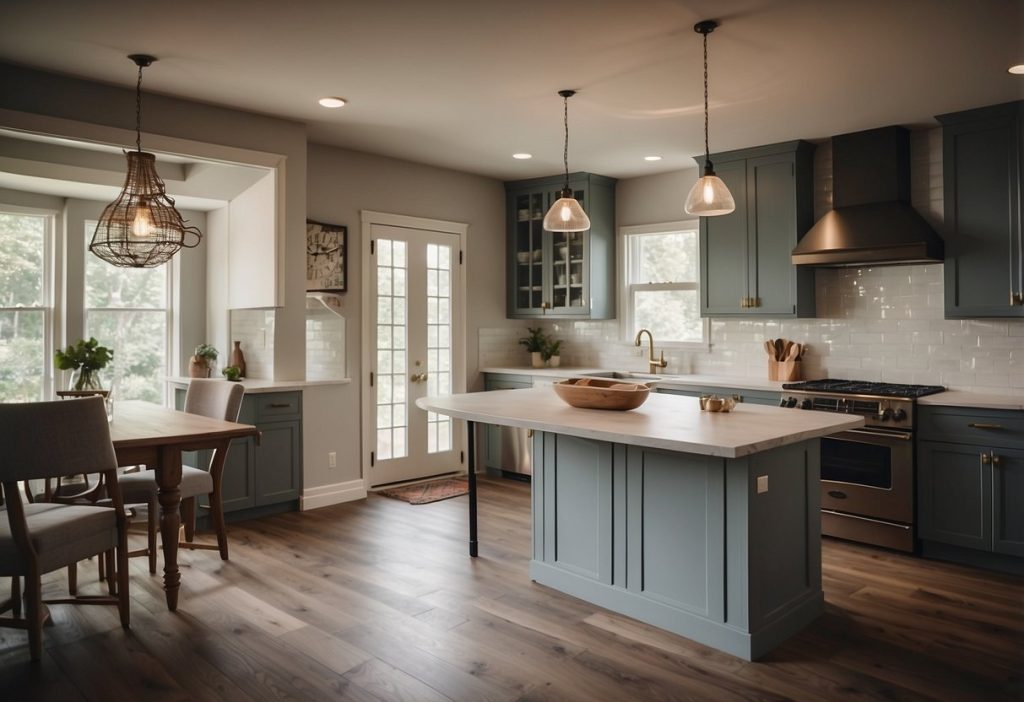 Maximizing tax credits through smart renovation choices can benefit families adapting homes for multiple generations. The renovations focus on enhancing accessibility, improving safety and security, and integrating energy-efficient features.
 When considering the Multigenerational Home Renovation Tax Credit, it’s important to understand how it influences taxes and to explore options for managing the financial load of renovations.
The Impact on Your Taxes
The Multigenerational Home Renovation Tax Credit is designed to assist taxpayers who are renovating their homes to accommodate a senior or a person with a disability by offering a refundable tax credit. Taxpayers can claim 15% of qualifying expenses for renovations valued up to $50,000, which means a potential credit of up to $7,500. Qualifying expenses may include costs associated with creating self-contained living quarters. It is crucial to ensure that these expenses are claimed correctly on one’s income tax return, and that they are in accordance with the Canada Revenue Agency’s (CRA) guidelines. Individuals should also consider whether the medical expense tax credit is applicable in their situation.
When considering the Multigenerational Home Renovation Tax Credit, it’s important to understand how it influences taxes and to explore options for managing the financial load of renovations.
The Impact on Your Taxes
The Multigenerational Home Renovation Tax Credit is designed to assist taxpayers who are renovating their homes to accommodate a senior or a person with a disability by offering a refundable tax credit. Taxpayers can claim 15% of qualifying expenses for renovations valued up to $50,000, which means a potential credit of up to $7,500. Qualifying expenses may include costs associated with creating self-contained living quarters. It is crucial to ensure that these expenses are claimed correctly on one’s income tax return, and that they are in accordance with the Canada Revenue Agency’s (CRA) guidelines. Individuals should also consider whether the medical expense tax credit is applicable in their situation.
Planning and executing a home renovation can be challenging, and understanding the details of the MHRTC, including eligibility and qualifying expenses, is key for homeowners. The tax credit is not only an impetus for encouraging family togetherness but also serves to offset some of the financial burdens associated with renovations. As of 2023, this tax credit acknowledges the shifting needs of Canadian households and the importance of designing spaces that accommodate multiple generations under one roof.
Highlights
- The MHRTC provides financial support for renovations that create living spaces for seniors or adults with disabilities in family homes.
- Understanding the eligible expenses and claim process is crucial for homeowners to maximize the benefits of the tax credit.
- This tax credit reflects the Canadian government’s recognition of the social and financial benefits of multigenerational living arrangements.
Understanding the Tax Credit
The Multigenerational Home Renovation Tax Credit aids families in altering homes for the needs of seniors and persons with disabilities. It addresses costs and agency involvement in claiming the benefit.Eligibility and Qualifications
To be eligible for the Multigenerational Home Renovation Tax Credit, a qualifying individual must be involved. A qualifying individual may either be a senior—65 years of age or older—or an individual eligible for the disability tax credit. For the latter, they must be 18 or older. The renovation should lead to the creation of a secondary, self-contained living space. Criteria for the qualifying individual include:- They must be a family member or related to the homeowner.
- The individual must reside or plan to live in the home following renovations.
Difference Between Non-Refundable and Refundable Credits
A refundable tax credit, such as the Multigenerational Home Renovation Tax Credit, allows individuals to receive a refund even if they do not owe any tax. In contrast, a non-refundable tax credit reduces the tax owed to zero but does not provide a refund for the remaining credit amount. This credit assists with up to 15% of renovation costs to a maximum of $50,000.Role of the Canada Revenue Agency
The Canada Revenue Agency (CRA) oversees tax regulations and ensures compliance with the Canadian Tax Code. To claim the credit, taxpayers must file with the CRA using line 45355 of their tax return. Additionally, this credit is separate from the Home Accessibility Tax Credit (HATC), and individuals should consult with the CRA for guidance on claiming both benefits for a tax year.Planning Your Renovation
Before breaking ground on a multigenerational home renovation, one must consider the design’s intent, establish a detailed timeline and budget, and seek guidance from skilled professionals. A thoughtful approach ensures that the project meets both family needs and tax credit requirements.
Setting a Purposeful Design
A successful renovation begins with a clear purpose in mind. When creating a secondary unit for an elderly family member or an adult qualifying for the disability tax credit, the design should address their needs for accessibility and comfort. A homeowner should ensure that building plans fully utilize the space and include household appliances that will be required for independent living. It’s crucial to check that the renovation qualifies for the Multigenerational Home Renovation Tax Credit by meeting government standards for a qualifying renovation.- Design Considerations:
- Accessibility features (e.g., no-step entries, wider doorways)
- Soundproofing for privacy
- Shared and private living spaces
Creating a Timeline and Budget
Organizing a realistic timeline and budget is essential to any renovation project. Homeowners must outline all expected costs, such as equipment rentals, contractor fees, and, if applicable, financing costs. They must also account for expenses that qualify for the renovation tax credit. It’s necessary to obtain all permits needed for legal compliance and to prevent costly delays.- Budget Breakdown:
Expense Category Estimated Cost Building Permits $X,XXX Contractor Fees $XX,XXX Materials $XX,XXX Equipment Rental $X,XXX Appliances $X,XXX Contingency 10% of total cost
Consulting with Professionals
Bringing in professionals can provide valuable insights and prevent common pitfalls. A certified contractor should be employed to ensure the renovation meets local building codes and remains within budget. Engaging an architect or designer can also prove beneficial for optimizing the layout of the secondary unit. These experts can assist in the selection of tax-credit-eligible qualifying expenses.- Professional Involvement:
- Architect/Designer: for optimal space utilization
- Certified Contractor: to manage construction and permits
- Tax Advisor: to maximize the renovation tax credit benefits
Executing the Renovation
When embarking on a multigenerational home renovation, obtaining the appropriate permits is essential, and managing the project effectively is key to ensuring the renovation meets your family’s needs.Acquiring the Right Permits
Securing the necessary permits is a critical first step in home renovations. In Canada, permits ensure that the construction meets local building codes and safety standards. Homeowners should visit their local municipality’s website or office to understand the specific permit requirements for their area. For multigenerational renovations, permits might be needed for structural changes, electrical work, and plumbing alterations.- Building Materials: All materials used must comply with the Canadian building regulations.
- Acceptable Documentation: Keep detailed records of all permits as part of the renovation documentation.
- GST/HST: Remember that GST/HST applies to the permit fees and must be factored into the overall renovation budget.
Effective Project Management
A renovation is a significant undertaking that requires careful planning, coordination, and oversight, often involving several types of construction professionals. Hiring a competent contractor is crucial as they will be responsible for managing the everyday tasks on-site, securing equipment rentals, and handling building materials and fixtures. Every expense from renovation costs, labour fees, to equipment rentals needs to be documented thoroughly.- Receipts: Keep all receipts and contracts from the contractor, as they’re necessary when claiming the Multigenerational Home Renovation Tax Credit.
- Dwelling: Ensure that the construction keeps the dwelling functional for all generations during the renovation period.
Renovation Details That Maximize Tax Credits
Maximizing tax credits through smart renovation choices can benefit families adapting homes for multiple generations. The renovations focus on enhancing accessibility, improving safety and security, and integrating energy-efficient features.
Accessibility Enhancements
When renovating for accessibility, homeowners should consider installing features that support mobility throughout the home. Key areas to address are the kitchen and bathroom, as these spaces are essential for daily activities.- Kitchen: Lower countertops and pull-out cabinets for easier access
- Bathroom: Walk-in showers and grab bars for added safety
Safety and Security Improvements
Enhancing safety can involve a variety of upgrades, from security monitoring systems to improved lighting. Families might install alarms and monitoring services that offer immediate assistance in case of emergencies. For outdoor maintenance, consider:- Motion-sensor lights for better visibility
- Slip-resistant flooring in entryways and outdoor paths
Energy Efficiency and Sustainability
Energy-saving renovations can be eligible for tax benefits, making them a wise choice for the environment and the wallet. To improve a home’s energy efficiency, homeowners should look at upgrades such as:- Double-glazed, energy-efficient windows
- High-efficiency heating and cooling systems
Financial Considerations
When considering the Multigenerational Home Renovation Tax Credit, it’s important to understand how it influences taxes and to explore options for managing the financial load of renovations.
The Impact on Your Taxes
The Multigenerational Home Renovation Tax Credit is designed to assist taxpayers who are renovating their homes to accommodate a senior or a person with a disability by offering a refundable tax credit. Taxpayers can claim 15% of qualifying expenses for renovations valued up to $50,000, which means a potential credit of up to $7,500. Qualifying expenses may include costs associated with creating self-contained living quarters. It is crucial to ensure that these expenses are claimed correctly on one’s income tax return, and that they are in accordance with the Canada Revenue Agency’s (CRA) guidelines. Individuals should also consider whether the medical expense tax credit is applicable in their situation.
For those who are undergoing renovations, understanding the implications of the Goods and Services Tax (GST) and Harmonized Sales Tax (HST) is essential. Expenses subject to GST/HST may impact the overall cost of the renovation project. It is necessary to note whether the contractor or renovation service provider has a valid GST/HST registration number, which should be included in all documentation and invoices. Similarly, if there is rental of equipment involved, one must consider GST/HST on those charges as well.
Exploring Financing Options
Renovations can be expensive, and the tax credit may not cover all the financial requirements. Homeowners may need to look into additional financing options. They should compare interest rates and payment terms from various financial institutions. Some considerations may include a home equity line of credit or a personal loan. It’s also wise to plan for the timely utilization of the tax credit to offset some of the upfront costs and lessen the financial burden of the renovation.Post-Renovation Checklist
After completing renovations for a multigenerational home, homeowners should focus on collecting proper documents and filing for the tax credit.Finalizing Documentation
One must gather all receipts and contracts associated with the renovation to ensure they are eligible for the Multigenerational Home Renovation Tax Credit (MHRTC). Acceptable documentation includes:- Detailed receipts: They should show the GST/HST registration number of the company or service provider, description of the work done, dates, and total amount paid.
- Contracts: Must be clear, stating the nature of the work and associated costs.
- Proof of payment: Bank statements, credit card receipts, or cancelled cheques.
Claiming Your Credit on the T1 Tax Form
When filing the T1 general tax form, homeowners should accurately report the qualifying expenses on the appropriate lines. To claim the Multigenerational Home Renovation Tax Credit, following steps should be taken:- Locate the section for the MHRTC on the T1 general tax form.
- Enter the total qualifying expenses on the designated line.
- Calculate 15% of these costs up to a cap, which can lead to a credit of up to $7,500.
The Broader Impact
The Multigenerational Home Renovation Tax Credit in Canada serves as a financial support mechanism for families who are integrating a dwelling for older adults or adults with a disability into their homes. This initiative not only assists in fostering multigenerational living but also eases the pressure on the broader affordable housing issue.Supporting Multigenerational Living
The introduction of the Multigenerational Home Renovation Tax Credit offers a compelling incentive for families to renovate their homes. This incentive is specifically designed to accommodate either seniors or adults with a disability, making it easier for them to live with relatives who can provide support. When a family adds a secondary dwelling unit to their principal home, and it is used by a qualifying relative who is either 65 or older or an adult with a disability, they may receive financial benefits. This aligns with the principal residence exemption, where families can benefit tax-wise from renovating their homes for these purposes.- Criteria for Support:
- The relative must be 65 or older or an adult qualifying for the disability tax credit.
- A secondary dwelling unit must be built or renovated to qualify.
Contributing to Affordable Housing
While primarily assisting families to retrofit their homes for multigenerational use, this tax credit indirectly aids in alleviating some pressures on the affordable housing market. By supporting the creation of secondary dwelling units, the program encourages the utilization of existing residential space, which might otherwise be underutilized, to house family members who might otherwise require separate, and often more costly, housing solutions.- Affordable Housing Aspects:
- Creating more living space within existing properties.
- Reducing demand for separate affordable housing units.
Regional Insights
In British Columbia and Vancouver, specific housing trends and regulations reflect the unique response to the newly introduced Multigenerational Home Renovation Tax Credit by the federal government.Case Study: British Columbia
British Columbia has recognized the benefits of multigenerational living and the challenges faced in its real estate market. The provincial government supports the federal tax credit initiative aimed at helping families accommodate a qualifying relative. A qualifying relative must be at arm’s length and must not dwell in an eligible dwelling owned by a trust. To be considered an eligible dwelling, the home must be owned by the individual claiming the credit and be the primary place of residence for the qualifying relation. This support is seen as families and homeowners in British Columbia are renovating their properties to include secondary suites or basement apartments to house elderly relatives or adults with disabilities. By doing so, they are not only creating a supportive family environment but also leveraging the federal tax credit. They can claim up to 15% of their renovation costs, for a maximum benefit of $7,500 per renovation, under the conditions set by the federal government.Case Study: Vancouver
In the bustling city of Vancouver, space is at a premium, and the addition of laneway houses has become a popular trend. Laneway houses are small homes built in the backyards of existing properties, typically opening onto a back lane. These dwellings are an innovative solution to increase housing options within the city. Families in Vancouver are using the Multigenerational Home Renovation Tax Credit to convert spaces into separate, but proximate homes for their relatives. The credit’s contribution towards the costs of such projects makes them more feasible in an otherwise expensive real estate market. As a result, more families are taking advantage of this federal support to create homes suitable for elder care or relatives with disabilities within their properties.Additional Resourceful Insights
When considering the Multigenerational Home Renovation Tax Credit, it’s essential to understand the robust nature of the benefit it provides. The Canada Revenue Agency (CRA) administers this credit, designed to support the creation or renovation of multigenerational homes. To be eligible, an individual must be either a senior aged 65 and older or an adult with a disability who qualifies for the disability tax credit. The purpose here is to foster environments where families can care for each other, particularly the elderly or disabled family members, within their homes. Renovations under this program must have an enduring nature, meaning they are long-lasting improvements that add value to the home. Such modifications might include constructing self-contained units within an existing home, which allows for greater independence and security for loved ones. Multigenerational homes are recognized for nurturing family bonds and providing economic benefits. By supporting adaptations through the tax credit, these living arrangements can be made more accessible to Canadian families, simultaneously catering to the diverse and changing needs of an aging population. Key Points to Note:- The CRA oversees the tax credit.
- An eligible individual can claim up to $50,000 in costs.
- A tax credit of 15% is available for qualified renovations.
- The renovations must serve the seniors or adults entitled to the disability tax credit.
- The goal is the long-term accommodation of familial needs within a single household.
0 responses