Best Home Elevators in Canada
We compared four established home-elevator companies serving Canadians across retrofit fit, drive technology, capacity, accessibility, customization, installation planning and maintenance.
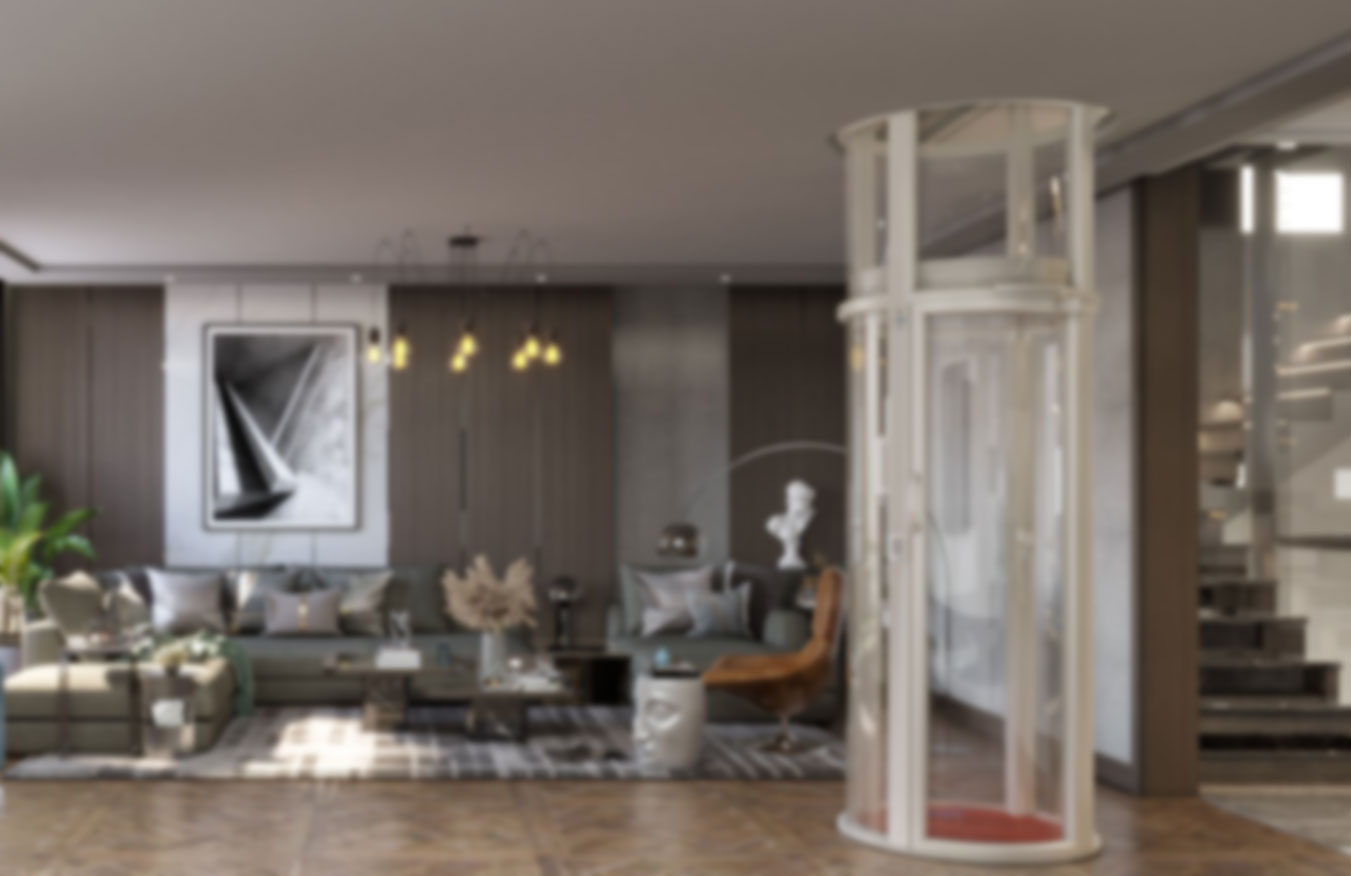
Residential elevators range from compact self-supporting lifts to traditional cabs requiring a constructed hoistway.
Cambridge Elevating is our best overall Canadian choice
Cambridge Elevating is our best overall starting point for homeowners who want Canadian engineering, several drive and cab formats, and extensive finish customization.
Nibav is especially attractive for a compact, self-supporting pneumatic retrofit. Savaria offers the broadest mix of traditional and panoramic residential elevator families.
The three strongest home-elevator companies to compare
Home elevators are construction projects, not plug-in appliances. Compare equipment and builder scope together, including permits, power, finishes and ongoing service.
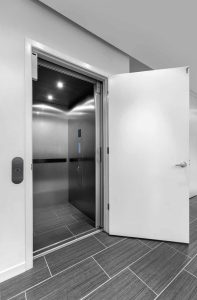
Cambridge Elevating
Custom project quote
Ontario-based manufacturer with compact Elmira, traditional residential and luxury custom elevator options.
- ✓ Canadian engineering and manufacturing
- ✓ Compact Elmira retrofit option
- ✓ Hydraulic and electric formats
- ✓ Extensive cab and finish choices
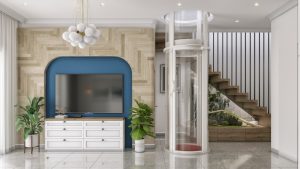
Nibav
Model and stop count determine price
Self-supporting panoramic pneumatic lifts designed to minimize conventional pit, hoistway and machine-room requirements.
- ✓ Compact clear-space requirements
- ✓ Up to four stops on current families
- ✓ Series III Max supports wheelchair use
- ✓ Fast on-site assembly positioning
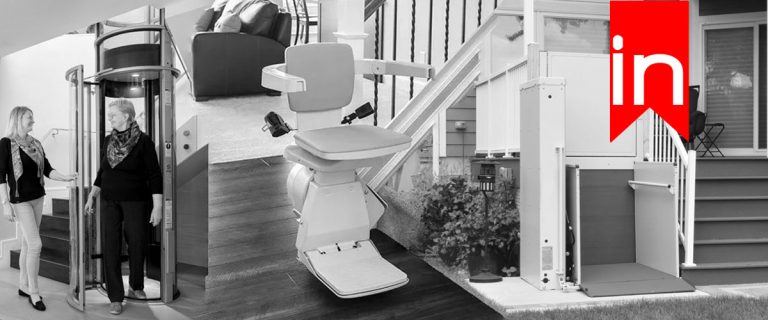
Savaria
Custom dealer and construction quote
A large Canadian accessibility manufacturer spanning traditional Eclipse and Infinity elevators plus panoramic Vuelift models.
- ✓ Traditional and panoramic formats
- ✓ Eclipse capacity up to 1,000 lb
- ✓ Vuelift integrated hoistway options
- ✓ Large Canadian dealer network
Compare Canadian home-elevator companies
Specifications vary significantly by model. Confirm local code, available space, required construction, rated capacity and maintenance support before selecting a drive system.
| Company | Representative products | Best fit | Capacity example | Construction approach | Pricing |
|---|---|---|---|---|---|
| Cambridge Elevating | E50, Elmira, Heritage, Cambrian, custom | Canadian custom and traditional elevators | Model dependent | Compact and hoistway-based choices | Custom project quote |
| Nibav | Series III, III Max, IV | Compact panoramic retrofit | Series III Max: 240 kg / 529 lb | Self-supporting pneumatic system | Published model pricing and site quote |
| Savaria | Eclipse, Infinity, Zenith, Vuelift | Broadest product and capacity range | Eclipse: 950–1,000 lb | Traditional or integrated panoramic hoistway | Dealer and construction quote |
| Stiltz | Duo Alta, Trio Alta | Two-floor shaftless retrofit | Trio accommodates a standard wheelchair | Self-supporting through-floor lift | Custom site-survey quote |
Published capacity and price examples are not interchangeable. The final project must follow the selected model’s current specifications and the authority having jurisdiction.
Four home-elevator companies serving Canadian homeowners
Each company uses a different mix of technology, local dealers and construction requirements.
Cambridge Elevating
Ontario manufacturer with compact, traditional and highly customized residential elevators.
Read our Cambridge Elevating review →Nibav
Panoramic pneumatic lifts aimed at compact retrofits with self-supporting structures.
Read our Nibav review →Savaria
Canadian accessibility manufacturer with traditional, luxury panoramic and higher-capacity options.
Read our Savaria review →Stiltz
Shaftless Duo and wheelchair-capable Trio through-floor home elevators.
Read our Stiltz review →How to plan a home elevator
Start with the home, rider and local code—not the showroom finish. The best design is the one that can be installed, serviced and used safely for years.
Research context: PHAC’s fall mortality and hospitalization rates rise sharply with age. See our national senior-fall data for the original tables and use it as context for a broader aging-in-place plan—not as evidence that any single product prevents falls.
Choose the elevator type
Compare traditional hoistway elevators, self-supporting panoramic lifts and shaftless through-floor models.
Plan the route
Confirm stops, door orientation, transfer space, landing clearance and whether a wheelchair or caregiver must fit.
Coordinate construction
Price the hoistway or floor opening, pit, overhead, electrical supply, structural work, finishes and permits.
Verify safety systems
Ask about door interlocks, emergency lowering, backup power, communications, obstruction sensors and manual rescue.
Confirm local service
Identify the licensed installer, inspection process, maintenance schedule, response time and source of replacement parts.
Compare lifetime cost
Include equipment, construction, permits, annual service, inspections, electricity, repairs and future modernization.
Qualifying homeowners may be able to claim eligible accessibility renovations through the federal Home Accessibility Tax Credit. Confirm eligibility and documentation requirements on the Canada Revenue Agency website or with a tax professional before relying on the credit.
Home-elevator questions Canadian families ask
How much does a home elevator cost in Canada?
Published Canadian guidance places many projects from roughly $20,000 into the high five figures, while custom multi-stop or luxury elevators can exceed $100,000. Site work and finishes materially affect the total.
Can a home elevator be added to an existing house?
Yes. Compact pneumatic and shaftless lifts can reduce construction, while traditional elevators may require a new hoistway, pit, overhead clearance and structural work.
Does a home elevator need a permit and inspection?
Typically yes. Requirements vary by province and municipality, and the installer should coordinate with the authority having jurisdiction and qualified construction trades.
What happens during a power outage?
Systems differ. Ask how emergency lowering, battery backup, door release and communications work, and who performs a rescue if the car stops between floors.
Can a home elevator qualify for an accessibility tax credit?
Eligible accessibility renovations may qualify for the federal Home Accessibility Tax Credit. Confirm the claimant, dwelling, invoices and project scope with the CRA or a tax professional.
Compare two complete home-elevator proposals
Begin with a site consultation, then compare equipment, construction, permits, finishes and maintenance on the same scope.
Editorial disclosure: Company rankings are based on product fit, Canadian service coverage, accessibility, planning support and value. Always use licensed installers and current local code requirements.
all these elevator company sell you the elevators but dont tell who can construct the shaft in older homes?
Do you have any lead?
we desperately need a elevator but cant find some one who can make shaft?
all these elevator company sell you the elevators but dont tell who can construct the shaft in older homes?
Do you have any lead?
we desperately need a elevator but cant find some one who can make shaft?
My wife and I live in Vernon BC my wife has mobility issues and I have Parkinson’s. Our house is a walkout by level. We’re looking for an elevator that can make three stops. Ground floor, top floor and in between entrance floor. We are looking for an elevator to carry a single person. We do have a space in our house that would be adequate. We’ve been told. But the problem we seem to be running into all the time his finding an elevator that will stop in between floors. If someone could get in contact with us that would be great.