

Dementia poses significant challenges for patients and their caregivers, particularly when it comes to safety and independence.
Medical alert systems offer a practical solution, providing round-the-clock monitoring and assistance for those affected by this condition.
These innovative systems combine wearable devices, sensors, and communication technology to detect emergencies, track patient locations, and promptly alert caregivers or emergency services when needed.
As dementia progresses, the risk of wandering and accidents increases, making constant supervision essential.
Medical alert systems help bridge the gap between the need for independence and the necessity of safety measures.
They can be customized to suit individual patient needs, offering features such as fall detection, GPS tracking, and medication reminders.
Implementing a medical alert system can significantly reduce caregiver stress and improve the quality of life for dementia patients.
These systems allow individuals to maintain a degree of autonomy while ensuring that help is always just a button press away.
With the right medical alert system in place, families can rest easier knowing their loved ones are protected, even when they can’t be physically present.
Highlights
- Medical alert systems provide crucial safety monitoring for dementia patients
- These systems offer customizable features to address individual patient needs
- Implementing a medical alert system can reduce caregiver stress and improve patient independence
Understanding Dementia and Its Challenges
Dementia presents a complex set of obstacles for seniors and their loved ones. This progressive condition impacts cognitive function, daily routines, and safety in profound ways.
Cognitive Decline and Memory Loss
Dementia gradually erodes mental faculties, particularly memory and reasoning skills. Seniors may struggle to recall recent events or familiar faces. Simple tasks like preparing meals or managing finances become increasingly difficult.
As the condition advances, communication often suffers. Finding the right words or following conversations can be frustrating. Mood swings and personality changes are common as well.
Early diagnosis is crucial. While there’s no cure, medications and therapies can help manage symptoms in some cases. Maintaining cognitive engagement through puzzles, music, or reminiscing can be beneficial too.
The Importance of Independence for Seniors
- Preserving autonomy is vital for seniors’ wellbeing, even as dementia progresses.
- Continuing familiar routines and activities fosters a sense of purpose and identity. Adaptive tools and home modifications can extend independence safely.
- Encouraging seniors to participate in decisions about their care empowers them.
- Simple choices like selecting outfits or menu options matter. Respecting preferences maintains dignity.
- Balancing safety with independence requires creativity.
- Labelled cabinets, simplified appliances, and memory aids can help. It’s about enabling seniors to do as much as they safely can for themselves.
Risks of Wandering and Fall-Related Injuries
- Wandering is a serious concern for seniors with dementia. Disorientation and memory loss can lead to dangerous situations.
- Installing door alarms or using GPS trackers can alert caregivers quickly.
- Creating a safe home environment is essential.
- Remove tripping hazards like loose rugs. Improve lighting, especially in hallways and stairwells. Install grab bars in bathrooms.
- Fall-related injuries pose significant risks. Hip fractures are particularly serious for seniors.
- Regular exercise can improve balance and strength. Proper footwear and vision checks are also important preventive measures.
Essential Features of Medical Alert Systems
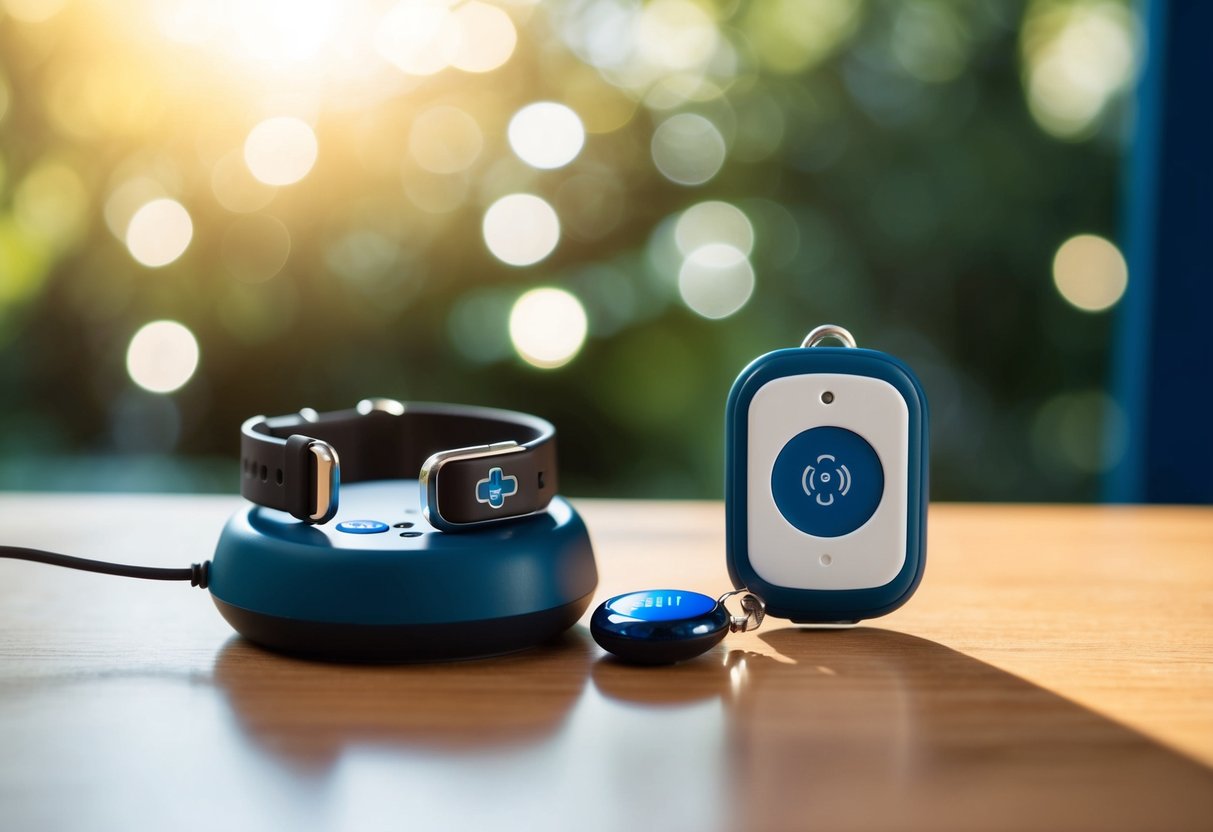
Medical alert systems for dementia patients require thoughtful design and key functionalities. The most crucial features prioritize safety, ease of use, and reliable communication in emergencies.
Fall Detection Technologies
Modern medical alert systems incorporate advanced fall detection sensors.
These clever devices use accelerometers and gyroscopes to detect sudden movements and impacts. When a fall occurs, the system automatically alerts caregivers or emergency services.
Some models employ artificial intelligence to distinguish between normal activities and actual falls, reducing false alarms.
The best systems allow for customization, adjusting sensitivity based on the patient’s mobility level.
Fall detection is especially vital for dementia patients who may forget to press a help button after a tumble.
This hands-free protection offers peace of mind to both patients and their loved ones.
GPS and Location Tracking
GPS tracking is a game-changer for dementia care. These nifty devices pinpoint a patient’s location, crucial for those prone to wandering.
Caregivers can set up “safe zones” and receive alerts if the wearer ventures outside designated areas.
Some systems offer real-time tracking through smartphone apps.
This feature is a godsend for families, allowing them to quickly locate a loved one who may have become disoriented.
Advanced models even integrate with mapping services, providing turn-by-turn directions to the patient’s location.
This speedy response can be life-saving in emergencies.
Waterproof Devices and Durability
Dementia patients need protection round the clock, including during bathing or swimming.
Waterproof medical alert devices offer this constant safeguard. These resilient gadgets withstand splashes, showers, and even full submersion.
Look for devices with an IPX7 rating or higher for optimal water resistance.
Durable materials like silicone or reinforced plastics ensure the device can handle daily wear and tear.
Some models feature breakaway lanyards for added safety, preventing accidental strangulation. Others offer multiple wearing options—wristbands, pendants, or clip-ons—to suit individual preferences.
Ease of Use and Equipment Design
Simplicity is key for dementia patients.
The best medical alert systems boast large, easy-to-press buttons with clear icons or text. Bright colours can help the device stand out, reducing the chances of misplacement.
Voice-activated systems are a boon for those with limited dexterity. These clever gadgets respond to simple commands, allowing patients to call for help without pressing buttons.
Battery life is crucial.
Opt for devices with long-lasting batteries and clear low-battery indicators. Some models feature wireless charging pads, eliminating the need for fiddly cables.
User-friendly base stations with clear speakerphones ensure effective communication during emergencies.
The most thoughtful designs incorporate nightlights or clock displays, adding practical functionality to bedside units.
Types of Medical Alert Systems
Medical alert systems for dementia patients come in several varieties to suit different needs and lifestyles. These range from at-home solutions to portable devices that offer protection both inside and outside the home.
At-Home Systems for Continuous Supervision
At-home medical alert systems provide round-the-clock monitoring for dementia patients in their residences.
These typically include a base unit and wearable pendants or wristbands.
The base unit connects to a landline or cellular network, allowing quick communication with emergency services. Wearable devices feature easy-to-press buttons for summoning help.
Some systems incorporate motion sensors and door alarms to detect wandering.
Advanced options may include fall detection technology, which automatically alerts caregivers if a patient takes a tumble.
Voice-activated units are particularly helpful for those with limited mobility. These allow patients to call for assistance simply by speaking.
On-the-go Devices for Active Lifestyles
For more mobile dementia patients, on-the-go devices offer protection beyond the home.
These compact gadgets use GPS technology to track a patient’s location.
Many feature two-way communication, enabling patients to speak with monitoring centre staff wherever they are.
Some devices allow caregivers to set up “safe zones” and receive alerts if the patient wanders outside these areas.
Water-resistant models ensure protection during bathing or swimming.
Battery life is crucial for these devices, with some offering up to 5 days of use between charges.
Certain models include fall detection and can automatically contact emergency services if needed. This provides peace of mind for both patients and caregivers.
Mobile Medical Alert Systems for Comprehensive Care
Mobile medical alert systems combine the features of at-home and on-the-go devices for comprehensive care.
These often include a portable device and a home base unit.
The portable component uses cellular networks and GPS for location tracking and communication outside the home. At home, it connects to the base unit for enhanced coverage.
Many systems offer smartphone apps for caregivers to monitor the patient’s location and receive alerts.
Some allow multiple family members to stay connected and informed.
Advanced options may include medication reminders and vitals monitoring. These features help ensure patients stay on top of their health regimens.
Wi-Fi capabilities in some systems allow for improved indoor location accuracy, particularly in large homes or care facilities.
Services and Support for Caregivers
Medical alert systems offer essential services to support those caring for dementia patients. These features aim to reduce caregiver stress and enhance patient safety.
Monitoring Centres and Emergency Response
Reliable monitoring centres form the backbone of medical alert systems for dementia patients.
Trained professionals staff these centres 24/7, ready to respond to any alerts. When a patient triggers their device, the centre quickly assesses the situation.
Staff can contact caregivers, family members, or emergency services as needed.
Some centres offer two-way communication through the alert device. This allows them to speak directly with the patient and provide reassurance.
Many systems now use GPS tracking to pinpoint a patient’s location.
This feature is invaluable if a dementia patient wanders away from home. Monitoring centres can guide emergency responders to the exact spot, potentially saving precious time.
Caregiver Tracking and Support Apps
Modern medical alert systems often include smartphone apps for caregivers.
These apps provide real-time information about the patient’s location and activity levels. Caregivers can set up custom alerts for specific behaviours or movements.
Some apps offer medication reminders and scheduling tools. These features help caregivers manage complex care routines more effectively.
Many apps also include secure messaging systems. This allows caregivers to communicate with monitoring centre staff or other family members.
Certain apps provide educational resources about dementia care.
They may offer tips for handling common challenges or updates on the latest research. Some even connect caregivers with support groups or professional advice services.
Customer Service Excellence
Top-notch customer service is crucial for medical alert systems serving dementia patients and their caregivers. The best companies offer 24/7 support through multiple channels.
This might include phone, email, and live chat options.
Many providers offer personalized setup assistance. They’ll help caregivers configure devices and apps to suit specific needs.
Some companies provide regular check-ins to ensure the system is working optimally.
Look for providers that offer flexible billing options and clear, no-nonsense contracts.
The best services understand the unique challenges of dementia care. They strive to make their systems as user-friendly and stress-free as possible for both patients and caregivers.
More Benefits
Medical alert systems for dementia patients offer several valuable features beyond basic emergency assistance. These extras can significantly enhance safety and quality of life for those with memory impairments.
Activity Monitoring and Medication Reminders
Many modern medical alert devices incorporate activity tracking to help caregivers keep tabs on their loved ones’ routines.
These systems can detect unusual patterns or long periods of inactivity, potentially signalling a problem.
Medication reminders are another crucial feature. For dementia patients, forgetting to take prescribed drugs can have serious consequences.
Alert systems often include programmable reminders that prompt users to take their medications on schedule.
Some devices also offer GPS tracking capabilities. This feature provides peace of mind for families, allowing them to locate a wandering loved one quickly and safely.
Coverage in Canada and Cellular Networks
Medical alert systems in Canada often utilize cellular networks for communication. This approach ensures coverage even in areas without landline service.
Many providers offer nationwide coverage, allowing users to remain protected while travelling within the country. It’s essential to verify the specific coverage areas with each service provider.
Some systems also work internationally, though additional fees may apply. This can be particularly useful for snowbirds who spend winters in warmer climates.
Affordability and No Long-term Commitments
Medical alert services in Canada are generally quite affordable. Monthly fees typically range from $20 to $50, depending on the features included.
Many providers offer flexible pricing plans without long-term contracts. This allows families to try out a service without being locked into a lengthy commitment.
Some companies even offer free trials, giving users a chance to test the system’s functionality and ease of use before making a financial commitment.
Equipment costs vary, with some providers including devices in the monthly fee and others charging a one-time purchase price. It’s worth comparing options to find the most cost-effective solution for each family’s needs.
Selecting the Right Medical Alert System
Choosing an appropriate medical alert system for dementia patients requires careful consideration of individual needs and available options. A well-chosen system can provide peace of mind and enhance safety for seniors living with cognitive impairments.
Assessing Medical Conditions and User Needs
When selecting a medical alert system, it’s crucial to evaluate the specific medical conditions and requirements of the individual with dementia.
Consider the severity of cognitive decline and any additional health concerns that may impact their ability to use the device.
Look for systems with features tailored to dementia patients, such as GPS tracking for wandering prevention. Assess the user’s dexterity and vision to ensure they can comfortably operate the device. Water-resistant options are ideal for those who may forget to remove the device while bathing.
Battery life is another critical factor. Opt for devices with long-lasting batteries to minimize the need for frequent charging, which can be challenging for someone with memory issues.
Comparing Leading Medical Alert Companies
Several reputable companies offer medical alert systems suitable for dementia patients.
Medical Guardian, Bay Alarm Medical, and MobileHelp are among the top providers in Canada.
Medical Guardian offers a range of devices, including wearable pendants and wristbands with fall detection. Their systems feature two-way communication and 24/7 monitoring.
Bay Alarm Medical provides GPS-enabled devices ideal for active seniors with dementia. Their systems offer geofencing capabilities to set safe zones for users.
MobileHelp offers both at-home and mobile systems with medication reminders, a useful feature for dementia patients who may struggle with adherence to treatment plans.
Compare pricing, monitoring centre response times, and customer service ratings when evaluating these companies.
Trial Offers and Service Agreements
Many medical alert companies offer risk-free trials, allowing families to test the system’s suitability for their loved one with dementia.
These trials typically last 30 days and provide an opportunity to assess ease of use and reliability.
When reviewing service agreements, pay close attention to contract length and cancellation policies. Look for companies that offer flexible month-to-month plans without long-term commitments.
Check for hidden fees, such as activation or equipment charges. Some providers may offer free spouse coverage, which can be beneficial for couples.
Ensure the agreement includes details on equipment maintenance and replacement policies. This is particularly important for dementia patients who may be prone to misplacing or damaging devices.
Implementing Home Safety Measures
Creating a safe home environment is crucial for dementia patients. Proper safety measures can prevent accidents and provide peace of mind for caregivers and family members.
Ensuring Environmental Safety for Dementia Patients
A well-designed home system can significantly reduce risks for those with dementia.
Start by removing tripping hazards like loose rugs and clutter. Install handrails in hallways and bathrooms for added support.
Adequate lighting is essential, so consider motion-activated night lights to guide the way during nighttime wandering.
Secure potentially dangerous items such as medications, cleaning supplies, and sharp objects. Use childproof locks on cabinets and drawers. Cover electrical outlets and hide cords to prevent accidents.
In the kitchen, install automatic shut-off devices for the stove and other appliances. Use colour-coded labels to help identify items and their proper storage locations.
Emergency Buttons and Two-Way Communication
Emergency buttons are a lifeline for dementia patients living independently.
These devices can be worn as pendants or wristbands, allowing quick access to help when needed. Look for waterproof options that can be worn in the shower, where falls are common.
Many systems offer two-way communication, enabling patients to speak directly with emergency responders or caregivers. This feature provides reassurance and can help assess the situation quickly.
Place additional wall-mounted emergency buttons in high-risk areas like bathrooms and bedrooms. Ensure the buttons are large, brightly coloured, and easy to press.
The Role of Home Nursing and Long-Term Care Facilities
For some dementia patients, home nursing services can provide essential care while maintaining a familiar environment. These professionals can assist with medication management, personal care, and safety monitoring.
They can also help implement and maintain home safety measures. This ensures the environment remains secure as the patient’s needs change.
When home care is no longer feasible, long-term care facilities offer specialized support. These facilities are designed with safety in mind. They feature secure units to prevent wandering and staff trained in dementia care.
Many nursing homes now incorporate smart technologies to enhance resident safety. For instance, they use wearable devices that track location and vital signs.
2 responses